High school homeschool curriculum: a complete guide to grades 9–12
High school at home is a planning problem more than a teaching problem. The teaching is often easier than it was in middle school — a fifteen-year-old can read the source, run the lab and write the paper largely alone — but every hour now has to add up to something a transcript can name, and the four years have to end with the credits a college or an employer expects to see. That is the frame for this page: how a week works, how the standards and the credit system relate, how an interest-led unit earns real credit, and how to keep the records that become the transcript.
The interest guides on this site are written at this band as the opening units of real courses — the human body guide as the first unit of anatomy and physiology, the coding guide as the first six weeks of an introductory programming course, the ancient Rome and American Revolution guides as source-based history — and this page shows how six of them assemble into a year that carries credit.
What a typical week looks like in grades 9–12
Formal work in high school runs about five to six hours a day, five days a week, and the student runs it from a plan you build together at the start of each term. The parent's job becomes course design, weekly review, grading with a rubric the student has seen, and finding outside help for the subjects where it is needed — most often a math or science course beyond what you can teach, or a language. Online courses, community college dual enrollment, co-ops and tutors are all normal parts of a homeschool high school, and none of them makes it less homeschooled.
Reading is entirely independent and heavy: a novel or play, a history or science text and a primary source in most weeks, an hour to ninety minutes a day. Writing is the skill every college will judge them on, and it should be daily — analytical essays, lab reports, source-based history papers and, by junior year, a research paper of some length with proper citations. Math takes an hour a day through at least Algebra 2, and through precalculus or calculus for a student heading toward a science, engineering or economics degree. A student who needs a course beyond your own ability should get it from outside rather than skip it.
The unit block, ninety minutes to two hours a day, is where the interest guides do their work, and at this level a unit is a slice of a course. Six weeks of the human body guide's grade 9–12 section — hierarchical organization, feedback mechanisms, quantitative labs with written reports, reading of primary literature — is a legitimate opening unit of a biology or anatomy and physiology credit. Six weeks of the coding guide is the first third of an introductory programming course. The scope and sequence tables on the deeper guides name an output per week; at this band those outputs are the graded work.
Credit is usually counted in hours or in completed work. A common convention is that one credit represents roughly 120 to 150 hours of work in a subject across a year, and half a credit around 60 to 75; another is that finishing a standard textbook or a full course, whatever the hours, earns the credit. Either way a lab science needs documented labs — most college admissions offices look for at least two or three lab sciences — and that is precisely what the guides' 9–12 sections produce.
A daily rhythm for grades 9–12
| Block | Time | What happens |
|---|---|---|
| Math | 60 min | Algebra 1 through at least Algebra 2, and on to precalculus or calculus for a STEM-bound student. Outside course if needed. |
| Reading | 60–90 min | Independent: literature, the history or science text for the current course, and a primary source most weeks. |
| Writing | 45–60 min | Analytical essays, lab reports, source-based history papers, a research paper each year from junior year on. Graded to a rubric. |
| Interest-led course unit | 90–120 min | A six-week slice of a credit-bearing course from a guide's grade 9–12 section: labs with reports, sources, programs, a final product. |
| Foreign language | 30–45 min | Daily; two years of one language is a common minimum for college admission, three or four is stronger. |
| Electives, PE, arts, work | 45–60 min | Art, music, a sport, a job, volunteering or a maker project; logged, because electives and activities go on the transcript and the application. |
How interest-led units map to the grades 9–12 standards
High school standards describe what a course should contain rather than what a week should, and at this band the useful move is to map a unit onto the course it belongs to. The Next Generation Science Standards' high school codes are course-level: the hierarchical organization of interacting systems in organisms (HS-LS1-2), designing solutions that reduce human impact on ecosystems (HS-LS2-7), the effect of temperature and concentration on reaction rate (HS-PS1-5) and Kepler's laws of orbital motion (HS-ESS1-4). The human body, animals, baking and solar system guides carry those codes in their 9–12 sections, with labs written to produce a report.
In English, the reading standards for science and technical subjects (CCSS.ELA-LITERACY.RST.9-10.7, translating information between text and visual forms) and for literature (RL.9-10.9, how an author draws on source material) are met by the literature and source work the history guides assign — a Platonic dialogue, Pericles' funeral oration, the Federalist and Anti-Federalist debates read against each other. Argument writing with valid reasoning and sufficient evidence (W.9-10.1) is the standard behind every source-based essay the units produce.
Social studies under the C3 framework at grades 9–12 asks students to integrate evidence from multiple sources (D2.His.16.9-12) and to analyze multiple and complex causes (D2.His.14.9-12), which is a description of a historiographical essay: why the Roman Republic failed, whether the American Revolution was radical, what feudalism was. In math, a scatter plot with a fitted line and a discussion of what the outliers mean — the dinosaurs guide's skull-length exercise, the animals guide's population modeling — is CCSS.MATH.CONTENT.HSS.ID.B.6 (representing two quantitative variables and fitting a function). Computer science maps to the CSTA level 3 standards, which the coding guide's 9–12 section treats as a first programming course.
The mapping that matters most at this band is to course names, not codes. Decide at the start of the year what each unit is a unit of — Biology, World History, Introduction to Programming — and keep the outputs under that heading. The codes are supporting evidence; the course name and the work are what go on the transcript.
A suggested 36-week year for grades 9–12
The 36-week year below is six units of six weeks, each run from a guide's grade 9–12 section, chosen so that the year contributes to four courses: two units of a lab science (the human body and the solar system, which between them cover biology and physical science labs), two of history from primary sources (the American Revolution and ancient Rome), one of computer science and one of ecology and animal behavior that can sit under biology or environmental science. Together with the daily math, reading and writing blocks and a language, that is a full ninth- or tenth-grade year.
In eleventh and twelfth grade most students narrow: fewer, longer units in the subjects they will pursue, an outside course or two, and a research project of their own design. The guides still work as the openings of those courses; the student chooses which.
| Unit | Weeks | Guide | The six-week thread | Portfolio |
|---|---|---|---|---|
| 1 | 1–6 | Human Body | The opening unit of an anatomy and physiology or biology course: organization from cell to organism, feedback mechanisms, quantitative labs with written reports and the reading of primary literature. | Lab reports in standard format, a homeostasis explanation with a diagram, a summary of one primary paper. |
| 2 | 7–12 | American Revolution | The founders and their critics read at length — Common Sense, the full Declaration, the Articles, the Federalist and Anti-Federalist debates — and the questions historians still argue. | A source-based essay with citations, an annotated bibliography, a document analysis set. |
| 3 | 13–18 | Coding & Computer Science | The equivalent of a first college programming course: functions with parameters and return values, lists and dictionaries, file input and output, error handling and a project of the student's own design. | A code repository with commits, a documented final project, a written description of the design. |
| 4 | 19–24 | Ancient Rome | The Romans themselves — Livy, Cicero, Tacitus, Pliny, the Twelve Tables — and the arguments about why the Republic failed and what the Empire was for the people who lived in it. | A historiographical essay, source analyses, a map with the evidence for one claim. |
| 5 | 25–30 | Solar System | Kepler's laws and Newton's gravity used to compute orbits and weigh planets, the published results of a real mission read as a source, and a mission designed under real constraints. | Orbital calculations, a mission proposal with launch window and transfer orbit, a data analysis from a mission dataset. |
| 6 | 31–36 | Animals & Wildlife | Introductory zoology and ecology: comparative anatomy, animal behavior with real observation protocols, population modeling and the policy science of conservation. | An ethogram with the data collected, a population model with its assumptions, a conservation policy brief. |
Record-keeping and the portfolio
High school records become the transcript, so keep them as if someone will read them, because someone will. For each course keep a one-page course description (what was studied, which texts and guides, how it was graded), the graded work — every lab report, essay, program and test — and a final grade with the rubric it came from. For each unit from a guide, the scope-and-sequence outputs are the graded work; file them under the course name. Log hours if your jurisdiction or your credit convention needs them; a simple weekly sheet is enough.
The transcript itself is a one-page table: course names by year, credits, grades, a grade-point average, and a note on the grading scale, with the parent as the issuing school. Colleges receive homeschool transcripts routinely; what they want alongside is the course descriptions, a reading list, and standardized test scores where they still ask for them. Keep a running reading list from ninth grade on — it is the document admissions readers most often mention — and a folder of the student's best work in each subject for the final portfolio.
State requirements vary
Homeschool requirements at the high school level differ by state, province and country, and they change. Some jurisdictions treat homeschool graduation entirely as the parent's decision; others specify required courses, credit counts, testing or an accredited umbrella program, and diploma recognition for employment, the military or financial aid can depend on the route taken. Nothing on this page is legal advice. Read your own jurisdiction's current rules from the primary source before ninth grade, and check the admissions pages of any colleges the student is considering for what they ask of homeschool applicants.
Common questions about homeschooling grades 9–12
How many credits does a homeschool high school diploma need?
There is no single answer, but the pattern colleges commonly look for is around 22 to 26 credits over four years: four of English, three or four of math through at least Algebra 2, three or four of science including two or three with labs, three or four of social studies, two or more of one foreign language, and electives including arts and physical education. Your own jurisdiction may specify differently, so check it, and check the admissions pages of colleges the student is considering.
Can an interest-led unit study count as high school credit?
Yes, when it is run at course level and documented. A six-week unit from a guide's grade 9–12 section — labs with written reports, primary sources with essays, a programming project with a repository — is a legitimate slice of a course. Name the course it belongs to, keep the outputs under that heading, grade them to a rubric, and count the hours or the completed work toward the credit. Six such units in a year, with the daily skill blocks, fill a full ninth- or tenth-grade schedule.
How do I give lab science credit at home?
Run real labs and keep the reports. A lab science credit needs documented experiments with a question, a method, data, analysis and a conclusion — the human body, animals, baking, insects and solar system guides are written to produce exactly that at the 9–12 level. Most colleges expect two or three lab sciences; a kitchen, a backyard and a few instruments cover most of biology and a good deal of chemistry and earth science, and an outside course can cover the rest.
What does a homeschool high school transcript look like?
A one-page table: courses by year, credits, grades, a grade-point average and the grading scale, with the parent or the family school name as the issuer, signed and dated. Behind it sit the course descriptions (one page per course naming texts, guides and assessment), a reading list, and the graded work in a portfolio. Colleges receive homeschool transcripts routinely; the descriptions and the reading list are what they read closely.
Should my teenager take outside classes or dual enrollment?
For at least some subjects, usually yes. Upper-level math and science, a foreign language, or anything you cannot teach well is better taught by someone who can, and community college dual enrollment produces a transcript from an accredited institution alongside yours. That does not make the education less homeschooled; the parent still designs the program, and the interest-led units and the reading and writing blocks continue at home.
The grades 9–12 section of every interest guide
All 32 guides, each opening at its grades 9–12 activities and reading suggestion where the guide has a dedicated section.
 Dinosaurs for grades 9–12
Turn a dinosaur obsession into a full homeschool curriculum — reading, math, science, history and art built around paleontology, for K-12. Opens the grades 9–12 section.
 Space & Astronomy for grades 9–12
Build a K-12 homeschool curriculum around space — astronomy, rocketry, and the history of exploration woven through reading, math and science. Opens the guide.
 Animals & Wildlife for grades 9–12
A homeschool curriculum built around animals — zoology, habitats, and conservation woven through reading, math, science and geography for K-12. Opens the grades 9–12 section.
 Ocean & Marine Life for grades 9–12
Build a homeschool curriculum around the ocean — marine biology, oceanography and exploration across reading, math, science and geography. Opens the grades 9–12 section.
 Minecraft for grades 9–12
Use Minecraft as a genuine homeschool teaching tool — math, engineering, history builds, creative writing and even economics, for K-12. Opens the grades 9–12 section.
 Art & Drawing for grades 9–12
A homeschool curriculum with art at the center — technique, art history, and the math and science hiding inside drawing, for K-12 learners. Opens the guide.
 Soccer for grades 9–12
Turn soccer obsession into homeschool fuel — statistics, physics, geography and writing built around the world's game, for K-12. Opens the guide.
 Horses for grades 9–12
A homeschool curriculum built around horses — equine science, history, and the reading, math and biology inside the barn, for K-12. Opens the guide.
 Robots & Coding for grades 9–12
Build a homeschool curriculum around robots and coding — programming, engineering design, math and the ethics of automation, for K-12. Opens the guide.
 Cooking & Baking for grades 9–12
The kitchen as classroom — fractions, chemistry, world geography and budgeting through a cooking-centered homeschool curriculum, K-12. Opens the guide.
 LEGO & Building for grades 9–12
A homeschool curriculum built on LEGO — engineering, math, storytelling and design thinking through building, for K-12 learners. Opens the guide.
 Music for grades 9–12
A homeschool curriculum with music at its core — theory as math, sound as physics, history through its soundtrack, for K-12 learners. Opens the guide.
 Trains for grades 9–12
Turn a train obsession into a homeschool curriculum — engineering, industrial history, geography and math built around railroads, for K-12. Opens the grades 9–12 section.
 Weather & Storms for grades 9–12
A homeschool curriculum built around weather — meteorology, data collection, climate and forecasting across science, math and geography. Opens the guide.
 Mythology for grades 9–12
Build a homeschool curriculum around mythology — Greek, Norse and world myths carrying literature, history, geography and art for K-12. Opens the guide.
 Gardening & Plants for grades 9–12
A homeschool curriculum grown in the garden — botany, ecology, math and patience through growing food and plants, for K-12 learners. Opens the guide.
 Ancient Egypt for grades 9–12
A homeschool curriculum built around Ancient Egypt — archaeology, hieroglyphs, engineering and daily life along the Nile, for K-12. Opens the guide.
 Cars & Engines for grades 9–12
Build a homeschool curriculum around cars — mechanics, physics, design history and the economics of manufacturing, for K-12 learners. Opens the guide.
 Chess & Strategy for grades 9–12
A homeschool curriculum built around chess — strategy, mathematics, history and the discipline of thinking ahead, for K-12 learners. Opens the guide.
 Birds & Birdwatching for grades 9–12
A homeschool curriculum built around birds — identification, migration, ecology and citizen science you can do from the window, for K-12. Opens the guide.
 Volcanoes & Geology for grades 9–12
A homeschool curriculum built around volcanoes and geology — plate tectonics, rocks, deep time and natural hazards, for K-12 learners. Opens the guide.
 Sharks for grades 9–12
Turn a shark obsession into a homeschool curriculum — marine biology, evolution, data literacy and conservation, for K-12 learners. Opens the guide.
 Human Body for grades 9–12
A human body homeschool curriculum for K-12 — anatomy, body systems, nutrition and health taught through reading, math, science and art, with a six-week plan. Opens the grades 9–12 section.
 Insects & Bugs for grades 9–12
An insect homeschool curriculum for K-12 — life cycles, entomology, pollination and ecology taught through backyard fieldwork, reading, math and art, with a six-week plan. Opens the grades 9–12 section.
 Ancient Greece for grades 9–12
An ancient Greece homeschool curriculum for K-12 — Athens and Sparta, democracy, the Olympics, philosophy and myth taught through reading, geography, math and art, with a six-week plan. Opens the grades 9–12 section.
 Ancient Rome for grades 9–12
An ancient Rome homeschool curriculum for K-12 — the Republic and Empire, roads and aqueducts, Latin, daily life and the fall of Rome through reading, geography, math and art. Opens the grades 9–12 section.
 American Revolution for grades 9–12
An American Revolution homeschool curriculum for K-12 — causes, battles, the Declaration, Loyalists and Patriots, and the Constitution taught through primary sources, maps, math and art. Opens the grades 9–12 section.
 Bees & Butterflies for grades 9–12
A pollinator homeschool curriculum for K-12 — bee and butterfly life cycles, the monarch migration, hive society and a pollinator garden taught through science, math, reading and art, with a six-week plan. Opens the grades 9–12 section.
 Coding & Computer Science for grades 9–12
A coding homeschool curriculum for K-12 — from unplugged algorithms and block-based programs to real Python, using only free tools, with a six-week plan, CSTA standards and a project portfolio. Opens the grades 9–12 section.
 Baking for grades 9–12
A baking homeschool curriculum for K-12 — fractions, ratios and baker's percentages, the chemistry of leavening and gluten, and controlled experiments you can eat, with a six-week plan. Opens the grades 9–12 section.
 Castles & Knights for grades 9–12
A castles and knights homeschool curriculum for K-12 — medieval Europe through castle engineering, feudal society, chivalry, siege science and primary sources, with a six-week plan and C3 standards. Opens the grades 9–12 section.
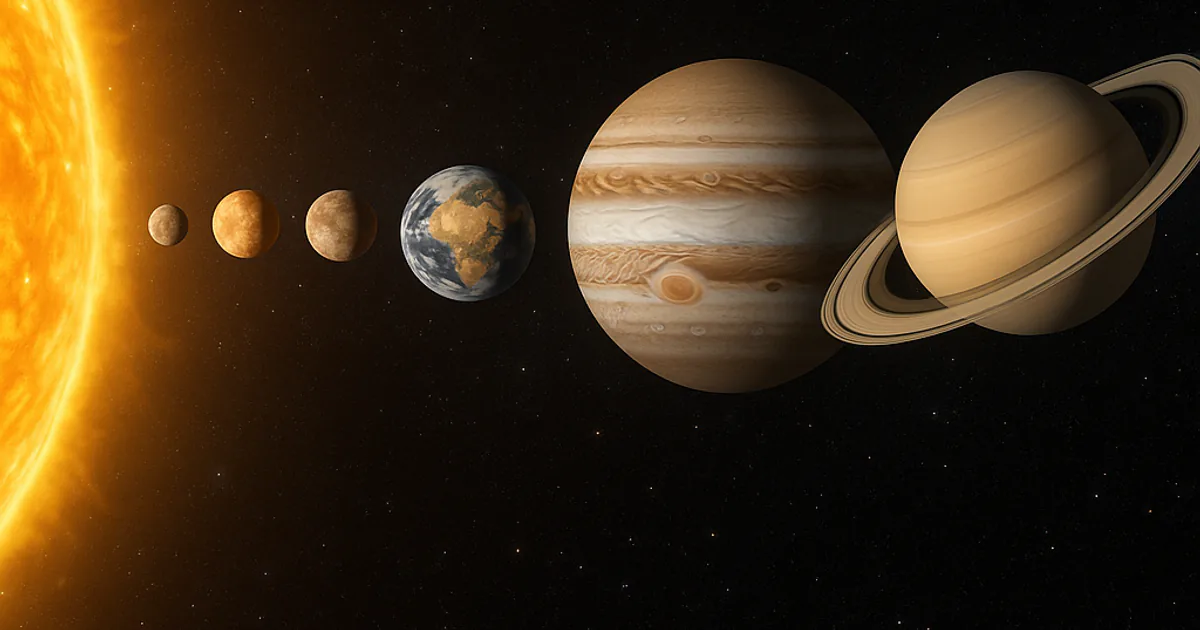 Solar System for grades 9–12
A solar system homeschool curriculum for K-12 — the eight planets, their moons, dwarf planets, asteroids and comets, and the robotic missions that explored them, with scale models, real data and a six-week plan. Opens the grades 9–12 section.
Other grade bands
Early Learners (grades K–2)
Short daily lessons, read-alouds, phonics and counting, and an interest-led unit that carries science and social studies. About 1–2 hours of formal work a day.
Elementary (grades 3–5)
Independent reading takes hold, math turns to fractions and data, and unit studies produce real research. About 2½–4 hours of formal work a day.
Middle School (grades 6–8)
Pre-algebra, argument writing, real data and the first primary sources. Students manage more of the day themselves. About 4–5 hours of formal work a day.
Build the year around what they love
Generate a complete, standards-aligned curriculum for grades 9–12 around any interest in minutes — free to try, no account required.