Ancient Egypt homeschool curriculum: unit study ideas for K-12
By Hands Down Education · Published · Updated
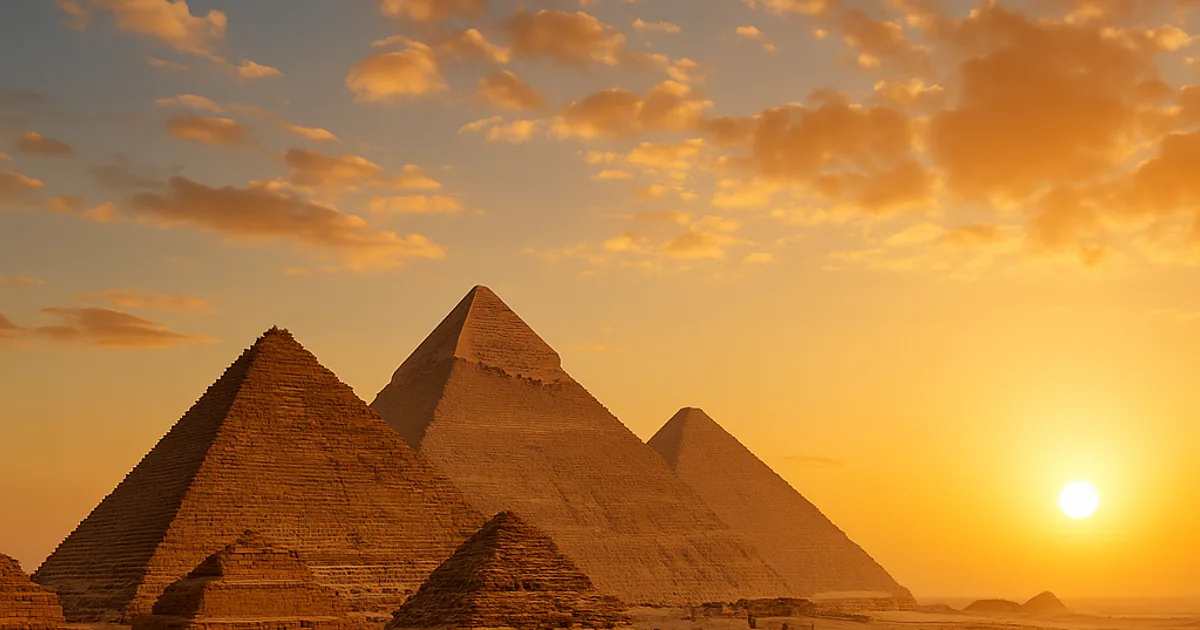
Ancient Egypt is the gateway drug of history for a great many children — mummies and pyramids first, then, if the curriculum is good, three thousand years of a civilization that invented writing systems, monumental engineering, and a bureaucracy that ran on grain receipts.
It teaches something historians care about deeply: how we know what we know. Egyptology is built from decipherment, excavation and inference, which makes it an unusually honest introduction to evidence and interpretation.
Build a ancient egypt unit for your child
Generate a complete, standards-aligned curriculum around this interest in minutes — free to try, no account required.
What your child will learn
By the end of this unit a child working at their own grade band can:
- Read how Champollion cracked the Rosetta Stone and explain the sequence of steps and why each one made the next possible. (Language Arts · Reading Informational Text, RI.3)
- Write fractions the Egyptian way, as sums of unit fractions with different denominators, and check each sum against the ordinary fraction. (Math · Fractions, 5.NF.A)
- Stretch a rope with twelve knots into a 3-4-5 triangle, show that the corner is square and explain why the rope-stretchers' method works. (Math · Geometry, 8.G.B)
- Calculate the volume of the Great Pyramid from its real base and height and compare it with a building your child knows. (Math · Geometry, 7.G.B)
- Mummify an apple in salt and baking soda over two weeks, record the mass loss and explain where the missing mass went. (Science · Physical Science, 5-PS1)
- Map the Nile's flood cycle against the farming calendar and explain why the whole civilization organized itself around one river's timing. (History & Social Studies · Geography, C3.Geo)
- Weigh two competing theories of how the pyramids were built against the evidence and state what would settle the question. (History & Social Studies · History, C3.His)
- Argue whether a museum should return an Egyptian object to Egypt, stating the strongest case on the other side fairly before answering it. (Language Arts · Writing, W.8.1)
A sample week
Reading & Writing
Learn to write a name in hieroglyphs, then read about Champollion cracking the Rosetta Stone and write how a code gets broken.
Math
Work with Egyptian fractions and the rope-stretchers' 3-4-5 triangle, then calculate the volume of the Great Pyramid from its real dimensions.
Science
Mummify an apple with salt and baking soda over two weeks, documenting mass loss — real preservation chemistry on a fruit-sized scale.
Social Studies
Map the Nile's flood cycle against the agricultural calendar and explain why the entire civilization organized itself around one river's timing.
Art
Paint in the Egyptian register style, following its strict conventions for perspective and proportion — constraint as artistic grammar.
Get the 6-week planner + new unit ideas
A print-ready PDF of this ancient egypt unit study — the six-week scope and sequence, grade-band notes, reading list and FAQs — plus an occasional email when a new interest guide goes up.
Adapting by grade
K-2 learners focus on pyramids, pharaohs, animals of the Nile and hieroglyph name-writing — highly visual, highly motivating early history.
Older students can weigh competing pyramid-construction theories against evidence, read primary texts in translation, and confront the ethics of museum collections and repatriation.
Homeschool curriculum guides by grade band: Early Learners (K–2) · Elementary (3–5) · Middle School (6–8) · High School (9–12)
Activities by grade band
Grades K-2: pyramids, pharaohs, the Nile and your name in hieroglyphs
Young children take to Egypt through pictures: the pyramids, the animals of the Nile, a pharaoh's headdress, and a writing system that is pictures too. A K-2 Egypt unit is name-writing in hieroglyphs, a pyramid built from sugar cubes, a river drawn on the floor with its animals along it, and a mummy story read aloud in a version that keeps it matter-of-fact.
- Name in hieroglyphs: print a hieroglyph alphabet, spell the child's name with it on a strip of brown paper, and draw the oval cartouche around it the way a pharaoh's name was written. How-to: one letter at a time, said aloud, copied from the sheet.
- Sugar-cube pyramid: build a square base of sugar cubes, then a smaller square on top, and again until one cube sits at the peak; count the cubes in each layer and write the numbers. How-to: a dab of glue or frosting per cube; the layer counts go on a card beside it.
- River on the floor: tape a long blue line across the room for the Nile, place green paper on both banks for the farms and brown beyond for the desert, and put a drawn crocodile, hippo, ibis and cattle where they belong. How-to: the child chooses where each animal goes and says why.
Reading suggestion: Mummies Made in Egypt by Aliki, a clear and unsentimental picture book on why and how mummies were made, and Bill and Pete Go Down the Nile by Tomie dePaola for a funny read-aloud set in the museum and on the river.
Early Learners homeschool curriculum guide (grades K–2)
Grades 3-5: the Rosetta Stone, the apple mummy and the rope triangle
Upper elementary students can do the unit's three signature activities in full: read how Champollion cracked the Rosetta Stone and explain the steps, mummify an apple in salt and baking soda over two weeks with the mass recorded, and stretch a twelve-knot rope into the 3-4-5 triangle the rope-stretchers used to square a field. Each one is a how-we-know lesson as much as a fact.
- Apple mummy: cut an apple into quarters, weigh one and bury it in a cup of salt and baking soda, leave one out in the air, and weigh both every two days for two weeks in a table. How-to: a kitchen scale in grams; the table has a column for each apple and a row per weigh-in.
- Rope-stretchers: tie twelve evenly spaced knots in a length of string, have three children or three chairs hold it at knots three, seven and twelve, and check the corner with a book's square edge. How-to: measure the spacing with a ruler before tying; uneven knots spoil the triangle.
- Cracking the code: read a short account of Champollion and the Rosetta Stone, then write the steps in order — what was on the stone, what he already knew, what he guessed, how he checked — as a numbered list. How-to: four steps minimum, each starting with 'Then he'.
Reading suggestion: Seeker of Knowledge: The Man Who Deciphered Egyptian Hieroglyphs by James Rumford, the picture-book biography of Champollion, and Pyramid by David Macaulay for how the Great Pyramid was designed and built, drawn step by step.
Elementary homeschool curriculum guide (grades 3–5)
Grades 6-8: Egyptian mathematics, the Nile calendar and the pyramid's volume
Middle schoolers can work the mathematics the Egyptians actually used — unit fractions, the rope geometry, the volume of a pyramid from its real base and height — and map the Nile's flood against the farming calendar to see why the whole civilization ran on one river's timing. The register-style painting teaches that strict conventions are a grammar, not a limitation.
- Unit fractions: write 3/4, 2/5 and 5/6 the Egyptian way as sums of unit fractions with different denominators, check each sum, and explain why the scribes found it useful for dividing loaves. How-to: a table with the fraction, the Egyptian sum and the check.
- The pyramid's volume: using the Great Pyramid's original base and height from a museum or Digital Giza page, calculate its volume with the formula one-third base area times height, then compare it with a building your child knows. How-to: units in meters throughout; the comparison building's volume estimated from its footprint and height.
- Flood calendar: on a circular calendar drawn on paper, mark the three Egyptian seasons — flood, growing, harvest — against the months, and write why sowing, taxing and pyramid-building each landed where they did. How-to: an outer ring for the Nile, an inner ring for the farmers.
Reading suggestion: The Golden Goblet by Eloise Jarvis McGraw, a Newbery Honor novel of a boy in ancient Thebes, and the free Digital Giza pages from Harvard for the pyramid's dimensions and excavation records.
Middle School homeschool curriculum guide (grades 6–8)
Grades 9-12: evidence, competing theories and the repatriation debate
High schoolers can treat Egyptology as an evidence discipline: weigh competing theories of pyramid construction against what excavation has found, read primary texts in translation, and argue the repatriation of museum objects with the strongest case on the other side stated fairly. Six weeks at this depth is ancient history at credit level with a real research method inside it.
- Theories on trial: read two competing accounts of how the pyramid blocks were moved and raised, list the evidence each relies on, and write what discovery would settle the question. How-to: the Digital Giza excavation records and a museum essay give the evidence; a table before the essay.
- Primary text: read a translated Egyptian text — a letter, a tomb autobiography, a section of the Book of the Dead — and write two pages on what it shows about daily life or belief, quoting it at least three times. How-to: the Institute for the Study of Ancient Cultures publishes free translations.
- Repatriation argument: choose one Egyptian object in a foreign museum, research how it got there, and write the case for returning it and the case for keeping it in a page each, before stating a position. How-to: the side you disagree with is written first and read by a parent for fairness.
Reading suggestion: The Rise and Fall of Ancient Egypt by Toby Wilkinson, a narrative history across three thousand years that does not shy from the violence behind the monuments, read in the chapters that match each week.
Six-week scope and sequence
| Week | Focus | Key activity | Output |
|---|---|---|---|
| 1 | Names, codes and how we know | Write the child's name in hieroglyphs inside a cartouche; read how Champollion cracked the Rosetta Stone; start the apple mummy so it has two weeks. Skill from the list above: read how Champollion cracked the Rosetta Stone and explain the sequence of steps (RI.3). | A cartouche, a numbered list of the decipherment steps and the first weigh-in of the apple. |
| 2 | The river and the calendar | Build the Nile on the floor for younger children; draw the circular flood calendar; map the Nile valley from the delta to Nubia. Skill: map the Nile's flood cycle against the farming calendar and explain why the civilization organized itself around it (C3.Geo). | A floor or paper map of the Nile and a three-season calendar with reasons. |
| 3 | Egyptian mathematics | The twelve-knot rope triangle; unit fractions for older students; the sugar-cube pyramid with layer counts. Skill: stretch a rope with twelve knots into a 3-4-5 triangle and explain why the method works (8.G.B). | A photographed rope triangle checked square and a table of unit-fraction sums. |
| 4 | The pyramid | Calculate the Great Pyramid's volume from its real dimensions and compare it with a known building; read Macaulay's Pyramid; weigh the apple at the halfway point. Skill: calculate the volume of the Great Pyramid and compare it with a building your child knows (7.G.B). | A volume calculation with the comparison and the apple mummy's mid-point data. |
| 5 | Preservation and belief | Finish the apple mummy and explain where the mass went; paint in the register style with its conventions; teens read the primary text. Skill: mummify an apple over two weeks, record the mass loss and explain where the missing mass went (5-PS1). | A completed mass-loss table with a written explanation and a register-style painting. |
| 6 | Evidence and argument | Weigh two pyramid-construction theories against the evidence; write the repatriation argument; present the unit's portfolio. Skill: argue whether a museum should return an Egyptian object, stating the strongest case on the other side first (W.8.1). | An evidence table on the construction theories and a two-sided repatriation essay. |
Materials and free resources
- A printed hieroglyph alphabet, an apple, table salt, baking soda, a zip bag and a kitchen scale for the two-week mummification experiment.
- A length of rope or string with twelve evenly spaced knots for the 3-4-5 triangle, a calculator for the pyramid volume and a map of the Nile valley.
- The British Museum (britishmuseum.org): free pages on the Rosetta Stone and its Egyptian collection, with images and teaching resources.
- The Metropolitan Museum of Art, Egyptian Art (metmuseum.org): free open-access images of tomb paintings, tools and daily-life objects for the art week.
- Penn Museum (penn.museum): free online resources on its Egyptian galleries, including mummification and daily life.
- Digital Giza, Harvard University (giza.fas.harvard.edu): free 3D models, excavation records and photographs of the Giza pyramids for the construction-theories week.
- Institute for the Study of Ancient Cultures, University of Chicago (isac.uchicago.edu): free teaching materials and images from a century of Egyptian excavation.
- Smarthistory (smarthistory.org): free short essays and videos on Egyptian art conventions for the register-style painting week.
Common questions
Is mummification too morbid?
Most children find it fascinating rather than disturbing, especially framed as preservation science. The apple experiment keeps it concrete and unsentimental.
How long can Egypt sustain a unit?
Easily 8-12 weeks, and it connects outward naturally — to Nubia, Rome, and the modern archaeology of the region.
Where does math fit?
Egyptian mathematics is genuinely distinctive: unit fractions, rope geometry, and practical surveying that rebuilt field boundaries after every flood.
How do I start an ancient Egypt unit study?
Start with a name. Print a hieroglyph alphabet, have your child write their own name in it and then read the short story of how Champollion used the Rosetta Stone to crack the script; that first afternoon is the writing strand and the how-we-know strand at once. In the same week, cut an apple, pack the pieces in salt and baking soda and weigh them, because the mummification experiment takes two weeks and should start early. The Nile map, the rope-stretchers' triangle and the pyramid volume follow in weeks two and three. Everything needed is a library book, a printout, an apple and a kitchen scale.
Is ancient Egypt a good homeschool subject?
It is one of the best history units for young children and one of the most honest for older ones, because Egyptology is built from decipherment, excavation and inference, so the question of how we know what we know is never far away. Inside the unit the content is real: unit fractions and the 3-4-5 rope triangle are mathematics, the pyramid's volume is geometry, the apple mummy is a mass-loss experiment, the Nile's flood calendar is geography, and the repatriation debate is an argument with evidence. The skills list above names each of those with the strand of the standards it lands on. Eight to twelve weeks is a comfortable length.
Related curriculum ideas
 Ancient Rome homeschool curriculum
An ancient Rome homeschool curriculum for K-12 — the Republic and Empire, roads and aqueducts, Latin, daily life and the fall of Rome through reading, geography, math and art.
 Mythology homeschool curriculum
Build a homeschool curriculum around mythology — Greek, Norse and world myths carrying literature, history, geography and art for K-12.
 Cooking & Baking homeschool curriculum
The kitchen as classroom — fractions, chemistry, world geography and budgeting through a cooking-centered homeschool curriculum, K-12.
Ready to build a ancient egypt unit for your child?
Generate a complete, standards-aligned curriculum around this interest in minutes — free to try, no account required.