Insect homeschool curriculum: bug unit study ideas for K-12
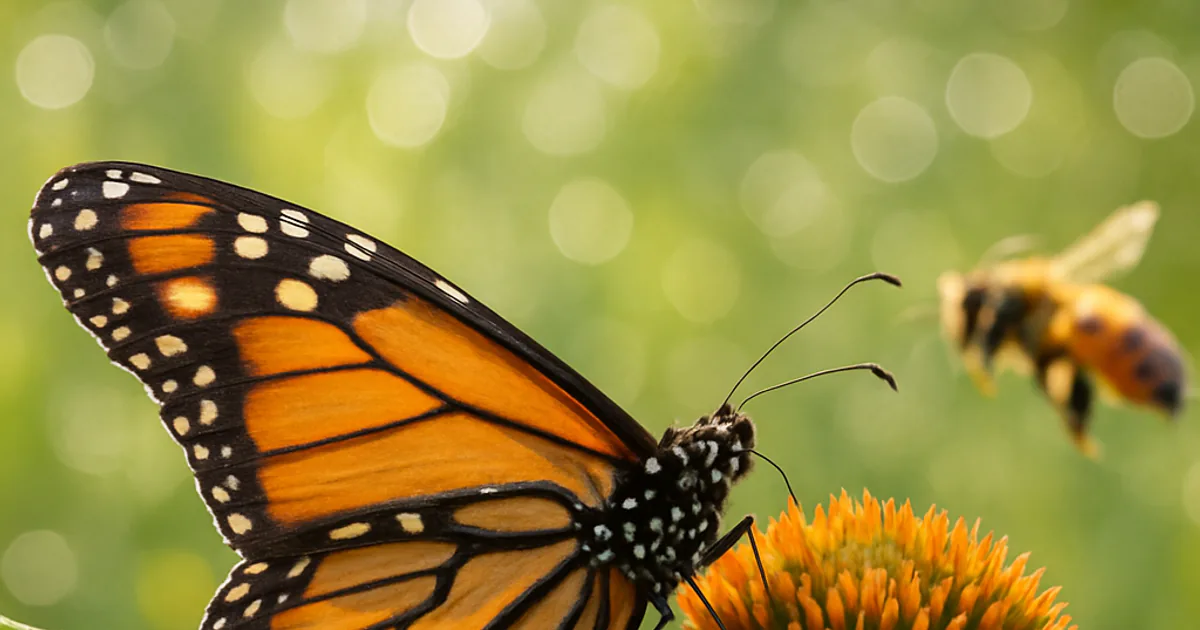
Insects are the most available science subject on Earth. There are more species of beetle than of every vertebrate combined, and a square meter of backyard, a porch light at night or a rotting log holds a full semester of them. An insect-centered curriculum turns a child who already flips rocks into a working entomologist: collecting, keying, counting, raising a life cycle from egg to adult, and writing it all down.
The subject carries every core strand without strain. Life cycles and body structure are elementary life science; pollination, food webs and population counts are ecology with real numbers; the history of silk, honey and the boll weevil is economic history; and a properly labeled scientific drawing is both art and evidence. A six-week bug unit study also produces something few units do — a collection or a raised butterfly the child can point to.
A sample week
Reading & Writing
Read a chapter of Jean-Henri Fabre's insect observations (his dung beetle and cicada essays are short), then keep a field notebook for three days on one insect in the yard, written in the present tense the way Fabre did.
Math
Run a pitfall trap (a yogurt cup sunk to the rim in soil) for three nights, tally the catch by order — beetles, ants, springtails, spiders — and graph it. Older students estimate the population per square meter and scale it to the whole yard.
Science
Raise painted lady caterpillars from a kit or collect a monarch caterpillar from milkweed, measure and photograph it daily, and record the timing of each stage from larva to chrysalis to adult.
Social Studies
Trace the Silk Road on a map from the silkworm's origin in China to Rome, and read how a caterpillar's cocoon became one of the most valuable trade goods in history.
Art
Make a scientific illustration of one insect under a hand lens — three body parts, six legs, wings and antennae in correct proportion — then a second drawing showing its camouflage or warning colors in its habitat.
Get the 6-week planner + new unit ideas
A print-ready PDF of this insects & bugs unit study — the six-week scope and sequence, grade-band notes, reading list and FAQs — plus an occasional email when a new interest guide goes up.
Adapting by grade
K-2 learners sort, count and watch: insect or not (six legs, three body parts), the four-stage life cycle, what an ant trail is doing. A bug jar with air holes and a magnifying glass is the whole lab; release everything the same day.
Middle and high schoolers move into method: dichotomous keys, sampling and population estimates, controlled experiments on insect behavior, and the pollination and pesticide debates where real data and real tradeoffs meet.
Activities by grade band
Grades K-2: six legs, three parts and a life cycle
Young children are already looking at the ground, so a K-2 insect unit simply gives them tools and words. The goals are the insect body plan (head, thorax, abdomen, six legs), insect versus not-insect, the four-stage life cycle seen with their own eyes, and a habit of drawing what they find. Everything is caught, watched and released the same day.
- Bug jar safari: with a clear jar and a magnifying glass, find five small animals in the yard or park, decide for each whether it is an insect by counting legs and body parts, and draw the ones that are. A spider and a pill bug are the best non-insects to find.
- Raise painted lady caterpillars from a kit: measure each one with a ruler every morning, draw the chrysalis when it forms, and count the days to the butterfly. Release the adults outside together and talk about what they need next.
- Ant watching: put a sugar cube and a crumb of cheese near an ant trail, watch which the ants take, and time how long until the first ant finds each. Draw the trail and mark where it goes into the ground.
- Life-cycle wheel: cut a paper plate into four sections — egg, larva, pupa, adult — and draw a butterfly or beetle at each stage, then compare with a grasshopper, which has no pupa. Two life cycles is the whole lesson.
Reading suggestion: The Very Hungry Caterpillar by Eric Carle for the life cycle everyone already knows, then Bugs Are Insects by Anne Rockwell, a Let's-Read-and-Find-Out title that teaches the six-legs rule with real precision.
Grades 3-5: classification, counting and pollination
Upper elementary students can sort by order (beetles, flies, butterflies and moths, bees and wasps, true bugs, grasshoppers), keep real tallies, and understand what insects do for the rest of the world — pollination, decomposition, food for nearly everything. This is the age for a first field guide, a first population count and the story of the honeybee.
- Run a pitfall trap for three nights: sink a cup to the rim, cover it with a raised board against rain, and each morning tally the catch by order using a picture key before releasing it. Graph the totals and write which order dominated and why the trap catches ground insects but not butterflies.
- Do a pollinator count: sit by one flowering plant for ten minutes on three days, tally every visitor (honeybee, bumblebee, hoverfly, butterfly, other), and repeat at a different time of day. Which insect did most of the work, and when?
- Dissect a flower and match its parts to the pollinator: petals, nectar, anthers with pollen, stigma. Then design an insect that would be perfect for that flower and draw it with its tongue length and body size labeled.
- Build a bug hotel from a wooden box, bamboo canes, drilled logs and pine cones, and keep a weekly log of who moves in. Solitary bees sealing a cane with mud is the moment to read about how they nest.
Reading suggestion: Smithsonian Handbooks: Insects by George McGavin as the reference to keep open, and The Bee Book from DK for the pollination strand; both are written at a level a fourth grader reads alone.
Grades 6-8: keys, sampling and behavior experiments
Middle schoolers can work like entomologists: identify with a dichotomous key rather than a picture, estimate populations with real sampling, run a controlled experiment on insect behavior, and argue from data about pesticides and pollinators. The writing shifts from description to method and result.
- Use a dichotomous key (free ones from university extension services) to identify ten insects to order and at least three to family, recording each decision in the key. Then write your own key for six insects you have photographed and test it on a family member.
- Compare two habitats with sweep-net or pitfall sampling — lawn versus meadow, or sunny versus shaded — using the same effort in each. Calculate the number of orders and the total count per sample and write a comparison that explains the difference in terms of food and shelter.
- Design a controlled experiment with mealworms or pill bugs: light versus dark, damp versus dry, warm versus cool, with ten animals per trial and three trials. Report the results with a bar graph and a paragraph on what the behavior does for the animal in the wild.
- Research one case of mimicry — viceroy and monarch, hoverflies and wasps, or the peppered moth — and write a two-page explanation of how the resemblance benefits the mimic, what evidence supports it and how such a pattern could arise over generations.
Reading suggestion: Selected essays from Jean-Henri Fabre's The Insect World of J. Henri Fabre, the founding field observations of entomology, and Buzz: The Nature and Necessity of Bees by Thor Hanson for the pollination and decline strand.
Grades 9-12: entomology as a working science
At high-school depth this becomes an introduction to entomology and ecology with lab reports, sampling statistics, primary sources and a real research question. Insects are the model organisms of genetics and behavior for good reason: they are cheap, fast and everywhere. Kept as a portfolio, six weeks of this work is a strong component of a biology credit.
- Carry out a biodiversity survey using a standard method — pitfall or sweep-net transects with fixed effort — across two or more sites, calculate a diversity index (Simpson's or Shannon's) in a spreadsheet, and write a full report with a hypothesis, method, results, and a discussion of sources of error.
- Run a fruit fly experiment: culture Drosophila from a supply company or a banana on the counter, and test either a behavior (phototaxis, geotaxis) or, with an ordered stock, a simple inheritance pattern across one generation. Report the counts against the expected ratio.
- Read one open-access study on neonicotinoid pesticides and bee health (many are on PLOS ONE and in Nature's open journals), summarize the study design, and write a policy memo on whether and how the pesticide should be regulated, citing the study's own limits.
- Conduct a decomposition study: place equal portions of fruit or leaf litter in mesh bags with different mesh sizes so that insects can or cannot enter, weigh them weekly for four weeks, and quantify how much of the breakdown depends on insects versus microbes.
Reading suggestion: For Love of Insects by Thomas Eisner, a chemical ecologist's account of decades of insect experiments, and the free Bugwood and BugGuide identification resources for the survey work.
Six-week scope and sequence
| Week | Focus | Key activity | Output |
|---|---|---|---|
| 1 | What is an insect? | Body plan, insect versus arachnid versus other arthropod; first bug jar safari or photo collection; start the field notebook. | A sorting chart with the evidence for each decision and the first five notebook entries. |
| 2 | Life cycles | Start raising painted ladies, mealworms or a collected caterpillar; daily measurements; complete versus incomplete metamorphosis. | A dated growth log with measurements and a labeled life-cycle diagram of two different insects. |
| 3 | Adaptation and behavior | Camouflage and mimicry cases; ant-trail and mealworm experiments; older students design a controlled behavior trial. | A behavior experiment write-up with a graph, or a mimicry explanation with drawings. |
| 4 | Pollination and plants | Flower dissection, pollinator counts, bug hotel build; read the honeybee's story from ancient Egypt to today. | A pollinator tally graph and a written explanation of one flower-insect partnership. |
| 5 | Ecology and populations | Pitfall or sweep sampling in two habitats; population estimates; food-web diagram with insects at the center; older students compute a diversity index. | A habitat comparison with data and a food web that shows what depends on insects. |
| 6 | Insects and people | Silk, honey, crop pests, malaria and pollinator decline; the pesticide debate with data; assemble the collection or field guide. | A final collection, illustrated field guide or research report with an evidence-based position. |
Standards this unit covers
- 1-LS1-1 (NGSS) — Use materials to design a solution to a human problem by mimicking how plants and animals use their external parts to help them survive — the body plan and adaptation strand.
- 2-LS2-2 (NGSS) — Develop a simple model that mimics the function of an animal in dispersing seeds or pollinating plants — the flower dissection and design-a-pollinator activity.
- 3-LS1-1 (NGSS) — Develop models to describe that organisms have unique and diverse life cycles but all have in common birth, growth, reproduction and death — the raised life cycle.
- 3-LS4-2 (NGSS) — Use evidence to construct an explanation for how the variations in characteristics among individuals of the same species may provide advantages in surviving — camouflage and mimicry.
- MS-LS1-4 (NGSS) — Use argument based on empirical evidence to support an explanation for how characteristic animal behaviors affect the probability of successful reproduction — the behavior experiments and social insects.
- MS-LS2-2 (NGSS) — Construct an explanation that predicts patterns of interactions among organisms across multiple ecosystems — pollination, predation and decomposition.
- HS-LS4-4 (NGSS) — Construct an explanation based on evidence for how natural selection leads to adaptation of populations — the 9-12 mimicry and pesticide-resistance work.
- CCSS.MATH.CONTENT.3.MD.B.3 (CCSS Math) — Draw a scaled picture graph and a scaled bar graph to represent a data set with several categories — the pitfall and pollinator tallies.
- CCSS.ELA-LITERACY.W.3.7 (CCSS ELA) — Conduct short research projects that build knowledge about a topic — the field notebook and the one-insect report.
Recommended books, sites and kits
- Bugs Are Insects by Anne Rockwell (Book (K-2)) — A Let's-Read-and-Find-Out title that teaches the six-legs, three-parts rule and how to tell an insect from a spider.
- Smithsonian Handbooks: Insects by George McGavin (Book (3-8)) — A photographic guide organized by order with clear identification notes; the shelf reference for the whole unit.
- The Insect World of J. Henri Fabre (Book (6-12)) — The founding field observations of entomology, in short essays that model how to watch and write about an animal.
- Buzz: The Nature and Necessity of Bees by Thor Hanson (Book (6-12)) — A readable natural history of bees, pollination and the decline debate for the week-four and week-six strands.
- iNaturalist and Seek (Website / app) — Photograph any insect, get an identification and contribute the record to a real research database — the photographic collection tool.
- BugGuide.net (Website) — A volunteer-curated identification site for North American insects with expert-checked photos by order and family.
- Monarch Watch and Journey North (Website) — Free monarch tagging, milkweed and migration-tracking programs that accept a family's observations.
- Insect Lore painted lady butterfly kit (Kit) — Live caterpillars shipped with food and a mesh habitat; the week-two life cycle from larva to release in about three weeks.
Common questions
What should an insect unit study include?
A complete insect unit study has five strands: what makes an insect (body plan and classification), life cycles observed first-hand, adaptation and behavior (camouflage, mimicry, social insects), ecology (pollination, decomposition, food webs and population counts) and the human side — silk, honey, crop pests, disease and the pollinator decline. The six-week scope and sequence above runs one strand per week and ends with a collection, field guide or research report.
Do we have to kill insects to make a collection?
No. A photographic collection — one clear photo per species, labeled with date, place and order — is what many entomologists now build, and iNaturalist will identify most of them. A catch-and-release jar with a hand lens and a sketchbook teaches the same observation. Families who want a pinned collection can make one ethically from insects found already dead, which turn up constantly on windowsills and porch lights.
What if my child is afraid of bugs?
Start with the ones almost no one fears — butterflies, ladybugs, fireflies, a raised painted lady — and let the child hold the magnifying glass, not the insect. Knowledge usually replaces fear within a week or two: a child who knows a wasp is not interested in her and a spider is not an insect is already calmer. Nothing in this unit requires handling anything.
Can we do this in winter or in a city?
Yes. Indoor options include a painted lady or mealworm life cycle kit (both work year-round), an ant farm, a fruit fly culture, and the insects that live in every building — silverfish, house flies, the moths in the pantry. City parks, tree pits and even sidewalk cracks host ants, beetles and pollinators. Winter is also the season for reading, keying a summer photo collection and studying how insects survive the cold.
Can I run an insect unit with several ages at once?
Easily. Everyone runs the same pitfall trap and raises the same caterpillars; the work changes by age. A first grader counts and draws the catch, a fourth grader graphs it by order and writes what each one eats, a seventh grader estimates density and compares two habitats, and a tenth grader designs a controlled behavior experiment with the same animals. The grade-band sections above are built so one week serves every child.
How do insects connect to math and history?
Insects are counted, measured and timed constantly — tallies, bar graphs, averages, ratios of body length to jump distance, life-cycle durations against temperature — which is the elementary and middle-school data strand in disguise. History runs through silk and the Silk Road, honey and beekeeping in ancient Egypt, the boll weevil and the cotton South, malaria and the Panama Canal, and the locust plagues of the American prairie. Each is a week's reading on its own.
Does this unit work for secular and faith-based homeschools alike?
Yes. The content is observation, classification, life cycles and ecology, and the activities are the same in either setting. Where the reading list touches evolution — mimicry and natural selection in the 6-8 and 9-12 bands — it is noted, and the activities can be framed as adaptation and variation in whatever way fits your family's convictions. The data the child collects is the same either way.
How much does an insect unit study cost?
A magnifying glass, a few yogurt cups, a white sheet and a flashlight for night collecting, and a notebook cover most of it. A painted lady kit runs roughly twenty to thirty dollars including the live caterpillars; a mealworm culture from a pet store is a few dollars. The books are library titles and every website and app on the resource list is free.
Related curriculum ideas
 Birds & Birdwatching homeschool curriculum
A homeschool curriculum built around birds — identification, migration, ecology and citizen science you can do from the window, for K-12.
 Gardening & Plants homeschool curriculum
A homeschool curriculum grown in the garden — botany, ecology, math and patience through growing food and plants, for K-12 learners.
 Animals & Wildlife homeschool curriculum
A homeschool curriculum built around animals — zoology, habitats, and conservation woven through reading, math, science and geography for K-12.
Turn this into a full curriculum
Generate a complete, standards-aligned curriculum around this interest in minutes — free to try, no account required.