American Revolution homeschool curriculum: unit study for K-12
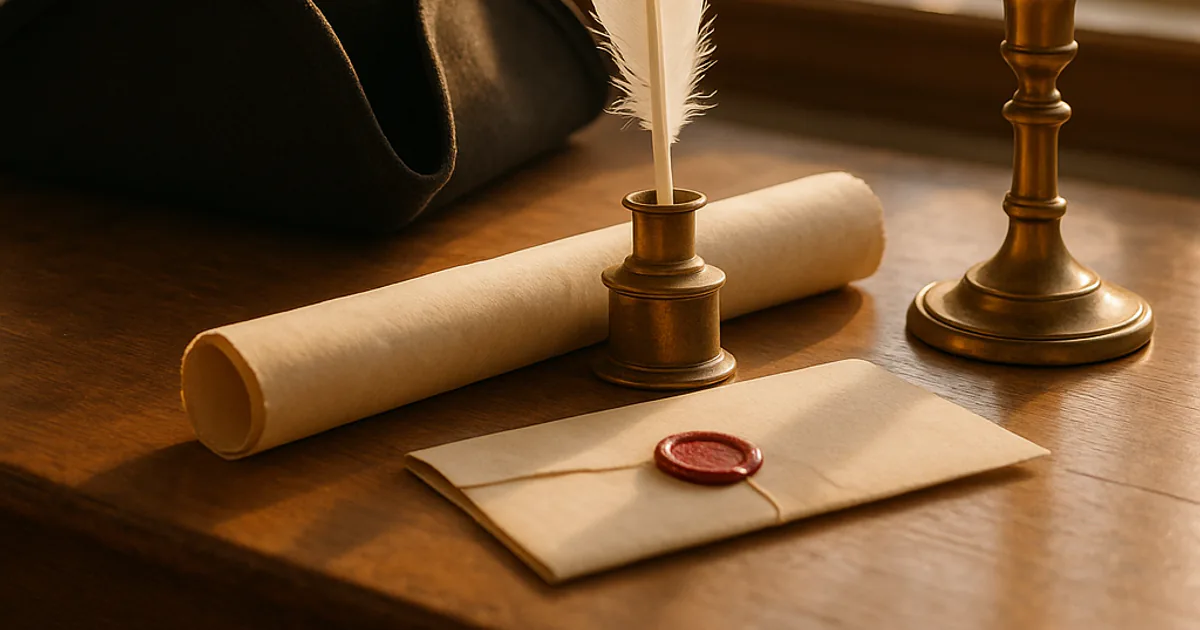
The American Revolution is the rare history topic where the primary sources are short, famous and free: a two-page Declaration, a one-page Common Sense extract, Paul Revere's own account of his ride, letters between John and Abigail Adams, a Loyalist's diary. An American Revolution unit study puts those documents in a child's hands and asks the questions historians ask — who wrote this, for whom, and what were they leaving out — at whatever depth the age allows.
It also teaches something the textbook version hides: that the outcome was not obvious, that a third of the colonists may have wanted no part of it, that enslaved people and Native nations had to choose a side with everything at stake, and that the war was won as much by supply lines, smallpox inoculation and French ships as by heroism. A six-week Revolution unit built on sources, maps and arguments is a full slice of American history and civics at any grade.
A sample week
Reading & Writing
Read the first two paragraphs of the Declaration of Independence aloud, put each sentence into your own words, then write a letter from a Loyalist neighbor explaining why they will not sign.
Math
Price a colonial family's tea before and after the 1773 Tea Act using the actual duty, then calculate what a three-pence tax on a pound of tea meant against a laborer's daily wage of about two shillings — and decide whether the anger was about money.
Science
Research smallpox inoculation at Valley Forge — Washington ordered the whole army inoculated in 1777 — and explain, with the numbers, why a disease killed more soldiers than battle and how the decision changed the war.
Social Studies
Map the war in three theaters — New England, the middle colonies and the South — with the five key battles placed and dated, and trace why the British moved south after Saratoga.
Art
Study Paul Revere's engraving of the Boston Massacre next to a written eyewitness account, list five things the print changed, and then make your own 'propaganda print' of a family event that shades the truth the same way.
Get the 6-week planner + new unit ideas
A print-ready PDF of this american revolution unit study — the six-week scope and sequence, grade-band notes, reading list and FAQs — plus an occasional email when a new interest guide goes up.
Adapting by grade
K-2 learners hold the Revolution through story and objects: a tricorn hat, a quill and ink, the Liberty Bell, the flag with thirteen stars, Revere's ride as a poem. The dates and the causes can wait; the idea that the country had a beginning, and that people argued about it, cannot.
Middle and high schoolers work with sources against each other — Patriot and Loyalist, British and American, free and enslaved — and take on the real debates: was the Revolution radical or conservative, what did 'all men are created equal' mean to the people who wrote it, and why did the Articles of Confederation fail?
Activities by grade band
Grades K-2: a country has a beginning
Young children meet the Revolution as a story with a beginning: people who lived far from their king, who got angry about being told what to do without a say, and who decided to make their own country. A K-2 unit is Revere's ride as a poem, the Tea Party as a scene, the Declaration read aloud, the flag counted, and a colonial day lived — with sequence and then-and-now as the real skills underneath.
- Read a picture-book version of Paul Revere's ride, then act it out with a lantern signal from an upstairs window — one if by land, two if by sea — and a ride around the house warning every room. Draw the sequence in four panels and tell it back in order.
- Have a colonial day: write your name with a feather dipped in ink, make johnnycakes or cornbread, play a game of marbles or hoop-and-stick, and light a candle at dusk instead of a lamp. Make a chart of five things a child in 1775 did not have and five things they did.
- Count the thirteen stars and stripes on the first flag and name the thirteen colonies from a map, coloring each one, then compare with the fifty on today's flag and talk about how a country can grow.
- Stage the Boston Tea Party with a cardboard ship and paper 'tea chests', and tell the story of why the colonists were angry in one sentence a five-year-old can own: they had to pay for tea but nobody asked them. Then vote on a family question so everyone feels what having a say means.
Reading suggestion: Paul Revere's Ride by Henry Wadsworth Longfellow in the Ted Rand illustrated edition, and Sam the Minuteman by Nathaniel Benchley, an I Can Read book that tells the day at Lexington through a boy's eyes.
Grades 3-5: causes, people and two sides of the story
Upper elementary students can hold the Revolution as causes, people and choices: the taxes and why they were resented, the men and women who chose a side, the Declaration in their own words and the war on a map. This is the age for a first primary source, a first Patriot-versus-Loyalist comparison and a novel set in the period.
- Read the first two paragraphs of the Declaration of Independence and rewrite each sentence in your own words on a two-column sheet, then pick the one sentence you think mattered most and explain why. Sign your version with a quill, the way the delegates did.
- Make a Patriot-and-Loyalist chart: for a merchant, a farmer, a minister, an enslaved man and a Mohawk leader, write one reason each might join the Revolution and one reason each might not, from your reading. Then write a diary entry for the same day in 1775 from one Patriot and one Loyalist in the same town.
- Map the war: place Lexington and Concord, Bunker Hill, Trenton, Saratoga and Yorktown with dates, draw the British sea routes, and write a sentence for each battle on what changed after it. Measure the distance Washington's army marched from New York to Yorktown and calculate the days at fifteen miles a day.
- Read a historical novel set in the period — Johnny Tremain or My Brother Sam Is Dead — and keep a reading journal that separates what really happened from what the author invented, using a nonfiction reference to check.
Reading suggestion: Johnny Tremain by Esther Forbes for the Boston chapters, George vs. George: The American Revolution as Seen from Both Sides by Rosalyn Schanzer for the two-sided view, and If You Lived at the Time of the American Revolution by Kay Moore for daily-life questions.
Grades 6-8: sources against each other
Middle schoolers can work with sources that disagree — a Patriot broadside and a British officer's letter, Revere's engraving and a trial transcript, Jefferson's draft and the edited Declaration — and argue from them. The unit becomes a course in reading evidence: who made this, for whom, what did they leave out, and how do we know. The writing shifts to argument with citations.
- Compare Paul Revere's engraving of the Boston Massacre with the testimony from the soldiers' trial (John Adams defended them and won), list every difference in a table — the number of soldiers, the order to fire, the dog, the weather — and write a page on what the print was for and why it worked.
- Read Jefferson's draft of the Declaration next to the final text and find the passage on the slave trade that Congress cut. Write an essay on why it was removed, what it reveals about the delegates, and how the same sentence about equality was used by abolitionists and by Frederick Douglass in the century that followed.
- Read Dunmore's Proclamation of 1775 and one Black Loyalist's account (Boston King's memoir is short and free online), then write the choice from the point of view of an enslaved man in Virginia: what each side offered, what each risked, and what happened to those who reached British lines after the war.
- Stage the Second Continental Congress debate on independence in June 1776 with named delegates — Adams, Dickinson, Franklin, Rutledge — each arguing from something they actually said or wrote, and take the vote. Then write the minutes and a paragraph on why Dickinson, who refused to sign, was not a villain.
Reading suggestion: The Revolutionary War chapters of A History of US: From Colonies to Country by Joy Hakim for the narrative spine, and the National Archives' DocsTeach collection of Revolution documents with transcriptions for the source work.
Grades 9-12: the Revolution as an argument that continues
High schoolers can read the founders and their critics at length — Common Sense, the full Declaration, the Articles of Confederation, the Federalist and Anti-Federalist debates — and take up the questions historians still argue: how radical the Revolution was, what it meant for the enslaved and for Native nations, and whether the Constitution completed it or contained it. With source-based essays and a research paper, six weeks of this is a substantial slice of a U.S. history or government credit.
- Read Common Sense in full and write an analysis of it as persuasion: the audience Paine was reaching, the arguments he chose, the ones he avoided, and why a pamphlet sold perhaps 150,000 copies in a population of 2.5 million. Compare its language with the Declaration written six months later.
- Write a research paper on the Revolution from one excluded point of view — Loyalists who left for Canada, the Iroquois Confederacy's split at the Oswego council, women's war work and Abigail Adams's 'remember the ladies', or the Black regiments of Rhode Island — with at least four sources, two of them primary, and an argument about what the Revolution meant to those people.
- Read the Articles of Confederation and Federalist No. 10 and No. 51, then write a brief on what went wrong between 1781 and 1787 — Shays' Rebellion, the debt, the trade wars between states — and whether the Constitution's answer was a continuation of the Revolution's principles or a retreat from them, citing both sides of the ratification debate.
- Analyze the war as logistics: using published figures for Continental Army strength by year, French loans and troop numbers, and smallpox deaths before and after Washington's inoculation order, build a table and a short quantitative argument about which factors were decisive at Saratoga and Yorktown.
Reading suggestion: 1776 by David McCullough for the war year as narrative history, The Radicalism of the American Revolution by Gordon Wood for the central interpretive argument, and the primary documents on Founders Online and the National Archives site.
Six-week scope and sequence
| Week | Focus | Key activity | Output |
|---|---|---|---|
| 1 | The colonies before the war | Map the thirteen colonies and the frontier; daily life in 1765; the French and Indian War and the debt it left; who lived here and who ruled. | A colored map of the colonies with a then-and-now chart of daily life. |
| 2 | Taxes, protests and the road to war | Stamp Act to Tea Party with the actual prices and duties; the Boston Massacre print against the trial record; a Patriot-and-Loyalist chart. | A timeline of the causes with a written judgment on whether the protests were justified, and the print-versus-testimony table. |
| 3 | Independence declared | Common Sense and the Declaration in your own words; Jefferson's draft against the final text; stage the Congress debate. | A rewritten Declaration extract signed with a quill, and the debate minutes. |
| 4 | The war in three theaters | Lexington to Saratoga to the southern campaign on a map; Valley Forge and inoculation; the French alliance; march-distance and supply math. | An annotated campaign map with a paragraph per turning point. |
| 5 | The people usually left out | Loyalists, women's war work, Black Loyalists and Patriots, the Iroquois split — each from a real account; a diary or letter from one of them. | A first-person letter or diary grounded in a cited source. |
| 6 | Yorktown, the peace and the Constitution | Yorktown and the Treaty of Paris; the Articles of Confederation and why they failed; the Constitution and the ratification debate; final project. | A final presentation, research paper, museum exhibit or newspaper with an evidence-based claim about what the Revolution meant. |
Standards this unit covers
- D2.His.4.3-5 (C3) — Explain why individuals and groups during the same historical period differed in their perspectives — the Patriot-and-Loyalist chart and diaries.
- D2.Civ.8.3-5 (C3) — Identify core civic virtues and democratic principles that guide government, society and communities — the Declaration in your own words.
- D2.His.6.6-8 (C3) — Analyze how people's perspectives influenced what information is available in the historical sources they created — Revere's engraving, Jefferson's draft and the Loyalist accounts.
- D2.His.5.6-8 (C3) — Explain how and why perspectives of people have changed over time — the equality sentence from 1776 to Douglass.
- D2.Civ.3.6-8 (C3) — Examine the origins, purposes and impact of constitutions, laws, treaties and international agreements — the Articles, the Treaty of Paris and the Constitution.
- D2.His.16.9-12 (C3) — Integrate evidence from multiple relevant historical sources and interpretations into a reasoned argument about the past — the 9-12 research paper.
- CCSS.ELA-LITERACY.RI.5.6 (CCSS ELA) — Analyze multiple accounts of the same event or topic, noting important similarities and differences in the point of view they represent — the two-sided readings.
- CCSS.ELA-LITERACY.RH.6-8.6 (CCSS ELA) — Identify aspects of a text that reveal an author's point of view or purpose — Common Sense, the Massacre print and the Loyalist letters.
- CCSS.MATH.CONTENT.6.RP.A.3 (CCSS Math) — Use ratio and rate reasoning to solve real-world problems — tea prices against wages, march rates and army-strength tables.
Recommended books, sites and kits
- Sam the Minuteman by Nathaniel Benchley (Book (K-2)) — An I Can Read book that tells Lexington through a boy's morning; the first-band read-aloud.
- George vs. George: The American Revolution as Seen from Both Sides by Rosalyn Schanzer (Book (3-5)) — Washington and George III page by page, showing that both sides had reasons; the two-sided view for elementary.
- Johnny Tremain by Esther Forbes (Book (3-8)) — The Newbery-winning novel of a Boston apprentice caught up in the Tea Party and Lexington; the reading-journal novel.
- A History of US: From Colonies to Country by Joy Hakim (Book (6-8)) — The Revolution volume of the standard homeschool narrative history, written in a conversational voice with sources quoted throughout.
- 1776 by David McCullough (Book (9-12)) — The war's hardest year as narrative history from both armies' letters and diaries; the high-school spine.
- National Archives DocsTeach and Founders Online (Website) — Free primary documents — the Declaration and its draft, letters, proclamations, the Articles — with transcriptions and teaching activities.
- Library of Congress: American Revolution primary source sets (Website) — Curated sets of maps, broadsides, prints and letters with teacher guides for every grade band.
- Liberty! The American Revolution (PBS) (Video series) — A six-part documentary built on the period's own words, one episode per week of the scope and sequence.
Common questions
What should an American Revolution unit study include?
A complete American Revolution unit study covers the causes (the French and Indian War debt, the taxes and the protests), the ideas (Common Sense, the Declaration), the war itself in its three theaters with the turning points at Saratoga and Yorktown, the people usually left out — Loyalists, women, enslaved and free Black Americans, Native nations — and the aftermath from the Articles of Confederation to the Constitution. Primary sources run through every week. The six-week scope and sequence above takes those in order and ends with a project.
Is the Revolution appropriate for young children?
Yes, through story, objects and the founding moments. Revere's ride, the Boston Tea Party, the flag, the Declaration read aloud, a colonial day with quill pens and johnnycakes are all K-2 material. The violence of the war, slavery and the tarring and feathering of Loyalists belong in the upper bands, where they can be discussed honestly. The grade-band activities are chosen so younger children share the week without meeting content they are not ready for.
How do I teach with primary sources when my child reads at grade level?
Use short extracts and read them together. Two paragraphs of the Declaration, a page of Common Sense, Revere's own account of his ride and one Abigail Adams letter are enough for the whole unit at elementary level, and all are free online. Rewriting a sentence in your own words is the core skill; the National Archives' DocsTeach site supplies the documents with the hard words explained. By middle school the extracts get longer and start disagreeing with each other, which is the point.
How do we cover Loyalists, enslaved people and Native nations fairly?
By giving them sources and choices, not a paragraph at the end. Perhaps a fifth of the colonists remained loyal, and many had good reasons; thousands of enslaved people ran to British lines after Dunmore's Proclamation offered freedom, while others fought for the Continental Army; the Iroquois Confederacy split over which side to back. The 3-5 and 6-8 activities include a Loyalist letter, a Black Loyalist's escape and the Iroquois council, each from a real account, so the student sees the Revolution as a choice people made with everything at stake.
Can I run an American Revolution unit with several ages at once?
It is one of the best topics for that. Everyone reads the same Declaration extract and makes the same map; the output changes by age. A first grader draws the Boston Tea Party and dictates a caption, a fourth grader writes a Patriot's and a Loyalist's diary for the same day, a seventh grader argues from sources whether the tax protests were justified, and a tenth grader writes a paper on what 'all men are created equal' meant in 1776. The grade-band sections above are written so you can pick one row per child from the same week.
How does the Revolution connect to math and science?
More than it seems. Tax rates, prices and wages in pounds, shillings and pence are ratio and currency practice; casualty and enlistment figures are data to graph; distance and time on the campaign maps are rate problems; and the science of the era — smallpox inoculation at Valley Forge, Franklin's electricity, the navigation and gunnery of the age of sail — is a real strand. The week plan and the grade bands above use each of them.
Does this unit work for secular and faith-based homeschools alike?
Yes. This guide teaches the Revolution from its documents and its people and lets the sources speak: the Declaration's 'Creator' and 'Nature's God', the sermons of the period, the Enlightenment writers the founders read, and the range of belief among them are all presented as history. Families of any worldview use the same sources, maps and projects; where a reading touches belief directly, the grade band notes it so you can frame it your way.
How much does an American Revolution unit study cost?
Nearly nothing. Every primary source is free from the National Archives, the Library of Congress or Founders Online; the reading spine is library books; the hands-on work needs paper, a feather or dip pen, a map and the ingredients for a colonial meal. A visit to a battlefield, a state house or a living-history site is a strong extra if one is nearby, not a requirement.
Related curriculum ideas
 Ancient Rome homeschool curriculum
An ancient Rome homeschool curriculum for K-12 — the Republic and Empire, roads and aqueducts, Latin, daily life and the fall of Rome through reading, geography, math and art.
 Ancient Greece homeschool curriculum
An ancient Greece homeschool curriculum for K-12 — Athens and Sparta, democracy, the Olympics, philosophy and myth taught through reading, geography, math and art, with a six-week plan.
 Ancient Egypt homeschool curriculum
A homeschool curriculum built around Ancient Egypt — archaeology, hieroglyphs, engineering and daily life along the Nile, for K-12.
Turn this into a full curriculum
Generate a complete, standards-aligned curriculum around this interest in minutes — free to try, no account required.