Viking homeschool curriculum: Viking unit study ideas for K-12
By Hands Down Education · Published
Vikings capture children with longships, runes and raids, and the real history is even better than the legend. The Viking Age ran from about 793, when raiders struck the monastery at Lindisfarne off the coast of England, to 1066. In those centuries people from what are now Norway, Denmark and Sweden farmed, traded, raided and settled from Ireland to the Caspian Sea, founded towns like Dublin and York, served as guards for the emperor in Constantinople, settled Iceland and Greenland, and reached North America about five hundred years before Columbus. Most of them were farmers, and almost none wore horned helmets.
A Viking unit study uses that story to teach history (cause and effect, daily life, reading sources and separating myth from evidence), geography (fjords, rivers, sea routes and the North Atlantic), math (longship measurements, scale drawings, distances and trade), science and engineering (boat design, buoyancy and navigation by sun and stars), and language arts (runes, the sagas and English words borrowed from Old Norse, like sky, egg, knife and window). A tub of water, a map, a ball of string and a library card carry most of it. It pairs naturally with our castles and knights, mythology and maps and geography guides.
Build a vikings unit for your child
Generate a complete, standards-aligned curriculum around this interest in minutes — free to try, no account required.
What your child will learn
By the end of this unit a child working at their own grade band can:
- Sort and count Viking objects and modern objects into categories and compare the groups. (Math · Data, K.MD.B)
- Compare daily life in a Viking Age farm and longhouse with daily life today. (History & Social Studies · History, C3.His)
- Trace Viking routes on a map and explain how fjords, rivers and seas shaped where Vikings traveled and settled. (History & Social Studies · Geography, C3.Geo)
- Design, build and test boat hulls and use the results to improve a design. (Science · Engineering, 3-ETS1)
- Write a narrative saga with a clear sequence of events and descriptive details. (Language Arts · Writing, W.4.3)
- Explain how trade connected Scandinavia with the Byzantine and Islamic worlds, using goods and coins as evidence. (History & Social Studies · Economics, C3.Eco)
- Make a scale drawing of a longship from published measurements. (Math · Geometry, 7.G.A)
- Describe how Iceland's Althing made laws and settled disputes, and compare it with another early assembly. (History & Social Studies · Civics, C3.Civ)
A sample week
Reading & Writing
Learn the 16 letters of the Younger Futhark rune row, write your name in runes on a clay or cardboard runestone, and write a short saga of a family voyage.
Math
Lay out the length of a longship such as the Gokstad ship, about 23 meters, with string in a yard or park, mark the 16 pairs of oar positions, and work out how many rowers it needed.
Science
Build boats from foil or wood scraps, test which hull shapes float highest and carry the most pennies, and explain why a shallow longship could sail both the open sea and rivers.
Social Studies
On a map of Europe and the North Atlantic, trace Viking routes to England, Ireland, Iceland, Greenland and Newfoundland in the west and along the rivers to Kyiv and Constantinople in the east.
Art & Music
Draw a Viking-style animal knot pattern of the kind carved on the Urnes stave church and the Oseberg ship, and weave a simple band on a cardboard loom.
Get the 6-week planner + new unit ideas
A print-ready PDF of this vikings unit study — the six-week scope and sequence, grade-band notes, reading list and FAQs — plus an occasional email when a new interest guide goes up.
Adapting by grade
K-2 learners meet Vikings through ships, homes and daily life: what children ate, how a longhouse kept people and animals warm in winter, and how long the voyages took. Building boats, dressing up and simple story versions of the sagas carry this age.
Middle and high schoolers can study the Viking Age as a connected world: why raids began, how trade linked Scandinavia to Baghdad and Byzantium, how Iceland governed itself through the Althing assembly founded in 930, and how historians weigh the sagas, written two centuries later, against archaeology, from the L'Anse aux Meadows site to coin hoards.
Homeschool curriculum guides by grade band: Early Learners (K–2) · Elementary (3–5) · Middle School (6–8) · High School (9–12)
Activities by grade band
Grades K-2: longships, longhouses and daily life
Young children learn about the Vikings through things they can build and pretend. They can learn that Vikings lived long ago in cold northern lands, that most families were farmers with sheep, cows and gardens, that they lived in long wooden houses with a fire in the middle, and that they sailed long ships with oars and a big square sail. Comparing Viking daily life with their own is the heart of this band.
- String longship: lay out a longship with string or chalk, count the oars and sit inside it with a whole family crew.
- Longhouse model: build a longhouse from a shoebox with a fire in the middle and a space for animals at one end, and talk about why people and animals shared the house in winter.
- Then and now: sort pictures into Viking life and life today, such as a candle and a lamp or a loom and a shop, and draw one of each.
- Rune names: copy your name in runes using a rune chart and decorate it as a runestone.
Reading suggestion: Leif the Lucky by Ingri and Edgar Parin d'Aulaire, a classic picture-book telling of Leif Erikson's voyage.
Early Learners homeschool curriculum guide (grades K–2)
Grades 3-5: routes, runes and boat building
Upper elementary students can follow Viking travels on a map, learn the rune row and why runes were carved on stone and wood rather than written in ink, and test boat designs the way Viking shipbuilders refined theirs. They can also learn the difference between raiders and traders and why Viking towns grew up at river mouths and harbors.
- Route map: trace Viking voyages on a map of Europe and the North Atlantic, measure each route with the map scale and make a table of distances.
- Boat test: build foil boats with different hull shapes, load them with pennies until they sink and graph the results.
- Rune messages: write coded messages to each other in the Younger Futhark and research what real runestones such as the Jelling stones in Denmark say.
- Trade goods: list what Vikings traded, such as furs, walrus ivory, amber and slaves, and what they brought back, such as silver coins, silk and glass, and mark where each came from.
Reading suggestion: Viking Adventure by Clyde Robert Bulla, a short chapter book about a boy's voyage to Vinland, and You Wouldn't Want to Be a Viking Explorer! by Andrew Langley.
Elementary homeschool curriculum guide (grades 3–5)
Grades 6-8: trade networks, sagas and evidence
Middle schoolers can see the Viking Age as part of a wider medieval world: silver from the Islamic caliphate flowing north along the Russian rivers, Vikings serving in the Varangian Guard of the Byzantine emperor, the Danelaw in England and the settlement of Normandy. They can read saga extracts and practice asking what a source can and cannot tell us.
- Hoard detective: study a published Viking silver hoard, list where its coins came from, and draw the trade routes that brought them together.
- Scale drawing: make a scale drawing of the Gokstad ship from its published measurements and calculate its area of sail.
- Saga versus spade: read the saga account of Vinland and the Parks Canada account of L'Anse aux Meadows, and chart what they agree and disagree on.
- Words we kept: collect English words borrowed from Old Norse and the weekdays named after Norse gods, and write a paragraph on how language shows contact between peoples.
Reading suggestion: The Sea of Trolls by Nancy Farmer, an adventure novel set in the Viking Age, alongside the DK Eyewitness book Viking for the history.
Middle School homeschool curriculum guide (grades 6–8)
Grades 9-12: sources, settlement and the medieval world
High schoolers can treat the Viking Age as a study in historical method and change: weighing monastic chronicles written by victims of raids against sagas written down in 13th-century Iceland and the evidence of archaeology and DNA; explaining the causes of Viking expansion; studying the Icelandic Commonwealth and its Althing; and tracing the conversion of Scandinavia and the rise of kingdoms. With a research paper, the unit supports a world history or European history credit.
- Source comparison: read the Anglo-Saxon Chronicle entry for the Lindisfarne raid and a passage from Egil's Saga, and write about how each author's position shapes the account.
- Causes essay: weigh explanations for the start of the Viking Age, such as trade, technology, politics and population, and argue for the strongest with evidence.
- Althing: research how Iceland's assembly made laws and settled disputes without a king, and compare it with another early assembly.
- Greenland: investigate why the Norse settlements in Greenland ended in the 1400s, weighing climate, trade and isolation.
Reading suggestion: The Vinland Sagas (The Saga of the Greenlanders and Erik the Red's Saga), in a modern translation, alongside Children of Ash and Elm by Neil Price, a recent history of the Viking Age.
Six-week scope and sequence
| Week | Focus | Key activity | Output |
|---|---|---|---|
| 1 | Who were the Vikings? | Scandinavia's geography, fjords and farms, when the Viking Age began and ended, and the horned-helmet myth; start the timeline. | A map of Scandinavia and a timeline from 793 to 1066. |
| 2 | Farm and longhouse | Daily life, food, clothing, crafts, and the roles of women, men and children; build a longhouse model. | A longhouse model and a then-and-now chart. |
| 3 | Longships and navigation | Ship design, the string longship, the boat test and navigation by sun, stars and landmarks. | A boat-test graph and a labeled longship diagram. |
| 4 | Raiders, traders and settlers | Lindisfarne, the Danelaw, Dublin and York, the eastern rivers and Constantinople. | A route map with measured distances. |
| 5 | Runes, sagas and stories | The rune row, runestones, Norse myths and the sagas, and words English borrowed from Old Norse. | A runestone and a written family saga. |
| 6 | Across the Atlantic | Iceland, Greenland, Vinland and L'Anse aux Meadows, and the end of the Viking Age; final presentation. | A finished timeline, saga or research paper. |
Standards this unit covers
- D2.His.2.3-5 (C3) — Compare life in specific historical time periods to life today — farm and longhouse life against your own.
- D2.Geo.2.3-5 (C3) — Use maps, satellite images, photographs and other representations to explain relationships between the locations of places and regions and their environmental characteristics — fjords, rivers and sea routes.
- D2.His.1.6-8 (C3) — Analyze connections among events and developments in broader historical contexts — Viking trade with Byzantium and the Islamic world.
- D2.His.16.9-12 (C3) — Integrate evidence from multiple relevant historical sources and interpretations into a reasoned argument about the past — chronicles, sagas and archaeology.
- 3-5-ETS1-3 (NGSS) — Plan and carry out fair tests in which variables are controlled and failure points are considered to identify aspects of a model or prototype that can be improved — the boat-hull test.
- CCSS.MATH.CONTENT.7.G.A.1 (CCSS Math) — Solve problems involving scale drawings of geometric figures — the scale drawing of the Gokstad ship.
- CCSS.ELA-LITERACY.W.4.3 (CCSS ELA) — Write narratives to develop real or imagined experiences or events using effective technique, descriptive details and clear event sequences — the family saga.
- CCSS.ELA-LITERACY.RI.8.8 (CCSS ELA) — Delineate and evaluate the argument and specific claims in a text, assessing whether the reasoning is sound and the evidence is relevant and sufficient — saga versus archaeology.
Recommended books, sites and kits
- Leif the Lucky by Ingri and Edgar Parin d'Aulaire (Book (K-3)) — A classic illustrated story of Leif Erikson's voyage west.
- D'Aulaires' Book of Norse Myths (Book (3-6)) — The Norse stories of Odin, Thor and the gods, told for children.
- Viking Adventure by Clyde Robert Bulla (Book (2-4)) — A short chapter book about a boy who sails to Vinland.
- You Wouldn't Want to Be a Viking Explorer! by Andrew Langley (Book (3-5)) — A funny, illustrated look at the hardships of a Viking voyage.
- DK Eyewitness: Viking (Book (4-8)) — Photographs of real artifacts with short explanations of Viking life.
- The Sea of Trolls by Nancy Farmer (Book (6-9)) — An adventure novel set in the Viking Age that draws on Norse myth.
- Children of Ash and Elm by Neil Price (Book (10-12)) — A detailed modern history of the Viking Age by an archaeologist.
- Parks Canada: L'Anse aux Meadows National Historic Site (Website) — Free information on the Norse site in Newfoundland and its excavation.
Materials and free resources
- A long ball of string or chalk and a tape measure for the life-size longship.
- Aluminum foil, wood scraps, a tub of water and pennies for the boat-hull test.
- A shoebox, craft sticks and clay for the longhouse model.
- Air-dry clay or cardboard and a printed rune chart for runestones.
- A map of Europe and the North Atlantic, a ruler and colored pencils for routes.
- National Museum of Denmark: free articles and images on Viking Age life and objects.
- Parks Canada: free material on L'Anse aux Meadows and the Norse in North America.
Common questions
What should a Viking unit study include?
Six strands: who the Vikings were and where they lived, farms, longhouses and daily life, longships and navigation, raids, trade and settlement from Dublin to Kyiv, runes, the sagas and Norse stories, and the North Atlantic voyages to Iceland, Greenland and North America. The six-week scope and sequence above runs one strand a week.
How do I start a Viking unit study?
Start with a ship. Take a ball of string outside and lay out a 23-meter longship, mark the oar positions and let your children sit in a row and pretend to row. That evening, read a picture-book version of Leif Erikson's voyage and write each child's name in runes. By the end of the first week you will have a longship map, a runestone and a list of questions, and the grade-band section above that fits your child gives the next steps.
What age is a Viking unit study best for?
Every age, with a different depth. Young children explore ships, longhouses and daily life; upper elementary students trace routes, learn runes and build and test boats; middle schoolers study trade networks, the sagas and the evidence for Vinland; high schoolers compare historical sources and archaeology and write about how the Viking Age shaped medieval Europe.
Can I run a Viking unit study with several ages at once?
Yes, and the life-size longship is the shared project. A five-year-old counts the oars, an eight-year-old writes their name in runes on a shield for the side, a twelve-year-old calculates the crew and the food for a two-week crossing, and a fifteen-year-old reads the saga account of the voyage to Vinland and compares it with what archaeologists found in Newfoundland.
Did Vikings really wear horned helmets?
No. No horned helmet has been found from a Viking Age warrior's grave; the one well-preserved Viking helmet, from Gjermundbu in Norway, is a rounded iron cap. Horned helmets became popular through 19th-century art and the costumes of an 1876 production of Wagner's Ring cycle, which makes the myth itself a good lesson in how to check a source.
Does this unit work for secular and faith-based homeschools alike?
Yes. The core is history, geography, engineering and language: ships, farms, trade routes, runes and the evidence for Viking voyages, which are the same in any home. Norse myths are taught as the stories Viking Age people told, alongside the spread of Christianity through Scandinavia around the year 1000, and each family can frame both in its own way.
How much does a Viking unit study cost?
Almost nothing. String, a tub of water, foil and pennies, cardboard, clay and a map cover the core activities. The National Museum of Denmark and Parks Canada publish free material on Viking life and L'Anse aux Meadows, and most of the books in the resources list are in public libraries.
Did the Vikings really reach North America?
Yes. The Norse settlement at L'Anse aux Meadows in Newfoundland, Canada, was excavated in the 1960s and is a UNESCO World Heritage Site, and in 2021 researchers used tree rings to show that wood there was cut by Norse visitors in the year 1021. The Icelandic sagas call the land Vinland.
Related curriculum ideas
 Castles & Knights homeschool curriculum
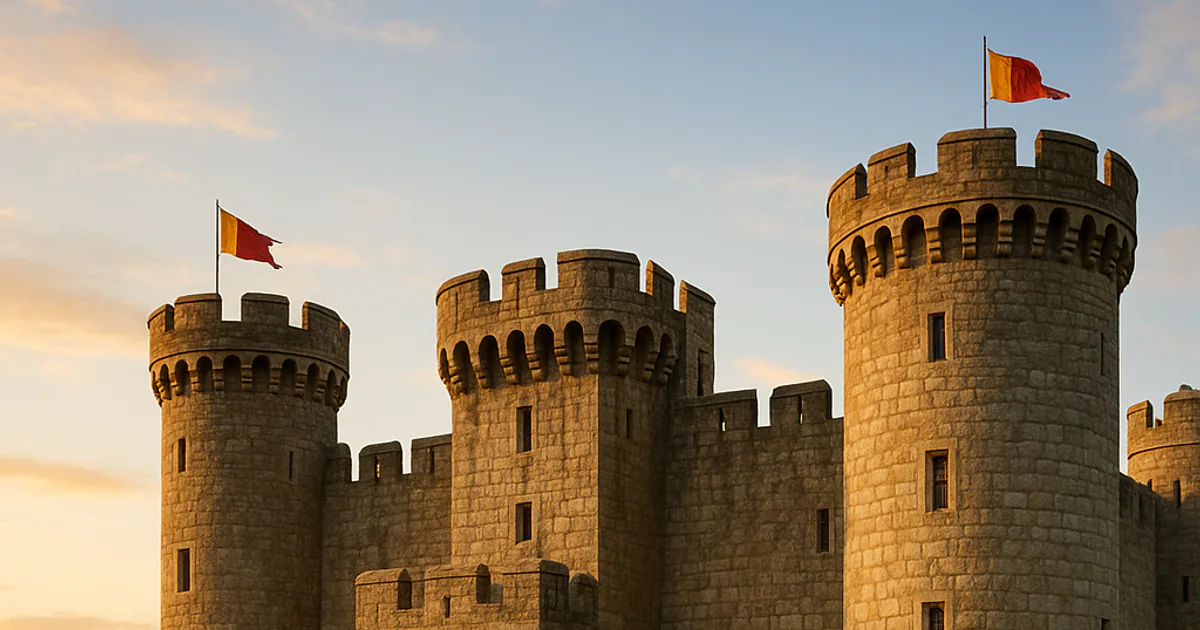
A castles and knights homeschool curriculum for K-12 — medieval Europe through castle engineering, feudal society, chivalry, siege science and primary sources, with a six-week plan and C3 standards.
 Mythology homeschool curriculum
Build a homeschool curriculum around mythology — Greek, Norse and world myths carrying literature, history, geography and art for K-12.
- Maps and Geography homeschool curriculum
A K-12 geography homeschool curriculum built on maps: directions, scale, latitude and longitude, landforms, projections and map history, with a six-week plan.
Ready to build a vikings unit for your child?
Generate a complete, standards-aligned curriculum around this interest in minutes — free to try, no account required.